

Prior to braces being placed on your teeth, a simple but important question has probably crossed your mind: What is orthodontics, and do I really need it? Perhaps your teeth are slightly irregular, gaps between your teeth bother you, or when you chew and smile, you feel your upper and lower jaws do not fit together properly. In such situations, it is natural to want to know exactly what orthodontics does and whether it can solve your problem.
Orthodontics is one of the most popular and specialized branches of dentistry, and it is not solely about achieving a more beautiful smile. This specialized treatment helps straighten your teeth, correct jaw abnormalities, improve how a patient’s teeth fit together, and even make oral hygiene easier. Not every patient with misaligned teeth will require the same type of treatment. Choosing the best method depends on factors such as the patient’s age, the type of abnormality, and the condition of each patient’s jaws and teeth.
In this article, the concept of orthodontics, the different treatment methods, benefits, treatment stages, the best age to begin treatment, and the points you should know before making a decision are explained in simple language, so that you can make a more informed decision about treatment for yourself or your child. By reading this article, you will understand who orthodontics is for and what it can do for you.
What Is Orthodontics, and What Exactly Does It Do?
Orthodontics is a specialized branch of dentistry concerned with diagnosing, preventing, and treating certain types of abnormalities involving the jaws and teeth. Conditions treated through orthodontics include irregular teeth and excessive spacing between teeth, jaws positioned too far forward or backward, bite problems, and functional problems. According to statistics from the American Association of Orthodontists (AAO), approximately 50 to 75 percent of people benefit from some form of orthodontic treatment.
According to the World Health Organization, malocclusion, or misalignment of the teeth, is considered the third most common oral and dental disorder after tooth decay and periodontal diseases.
According to a study published in 2023 in the American Journal of Orthodontics and Dentofacial Orthopedics, the average prevalence of malocclusion in the global population is 56 percent, and this figure is increasing in developing countries. These findings demonstrate more clearly than ever the importance of access to high-quality orthodontic treatment.
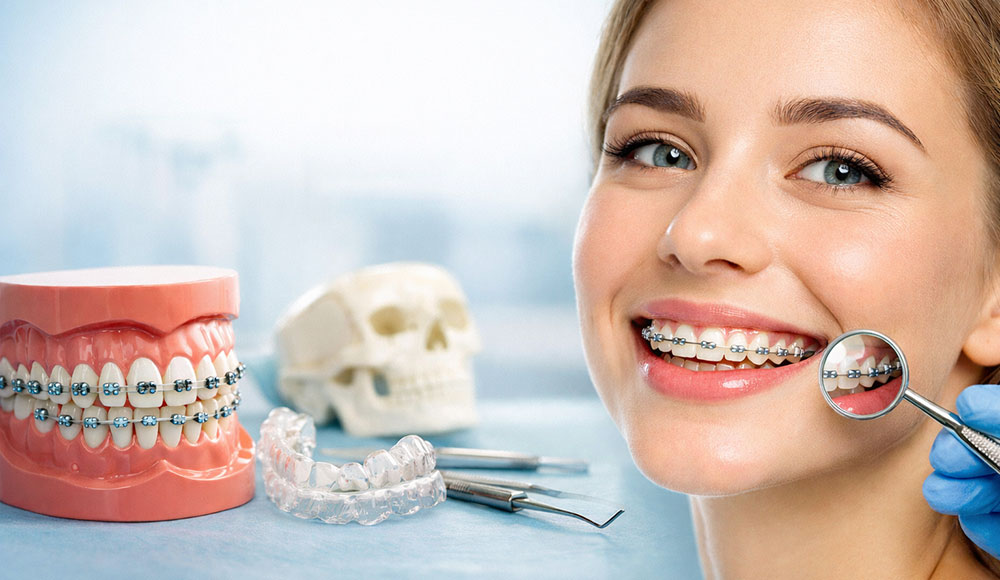
Image caption: A girl with a beautiful smile and straight teeth following orthodontic treatment, with a dental mirror showing a close-up view of the teeth.
What Problems Does Orthodontics Treat?
Contrary to popular belief, orthodontics is not simply a cosmetic or appearance-based treatment. Rather, it is a multifaceted treatment that simultaneously treats several important problems or prevents them from occurring. Orthodontics corrects and treats dental and jaw problems. Therefore, by treating abnormalities of the teeth and jaws, several related problems may also be treated, including:
- Digestive problems
- Speech problems
- Psychological problems
- Progressive tooth decay
- Gum damage
- Cosmetic problems
Abnormalities of the jaws and teeth often prevent food from being chewed properly, and as a result, the patient is continually affected by digestive problems. Occlusal abnormalities can cause chewing forces to be distributed improperly and can damage the temporomandibular joint. Research published in the Journal of Oral Rehabilitation in 2023 indicates that correcting occlusion through orthodontics can improve chewing efficiency by as much as 45 percent.
In addition, when the teeth do not fit together correctly, the resulting additional wear and friction can cause serious damage to the teeth. Orthodontics treats all of these problems. Malocclusion can cause asymmetrical wear of dental surfaces. A 2024 study in Clinical Oral Investigations found that timely orthodontic treatment significantly reduces the risk of pathological wear of tooth enamel.
Furthermore, abnormalities involving the jaws and teeth tend to worsen over time. In other words, the patient may develop additional problems in the future. Because these problems are multifaceted, they can severely affect the patient’s life. Patients who require treatment for jaw and dental abnormalities may, if left untreated, experience headaches, back pain, and neck pain in addition to the problems mentioned above.
The Experience of Orthodontic Treatment with Professor Jamilian
To see more examples of orthodontic treatment, you can visit the clinic’s gallery of orthodontic before-and-after photographs. There you can see additional examples of orthodontic treatment involving the teeth and jaws. Different treatments are considered depending on the particular abnormality of the jaws and teeth. Here, you can see photographs of teeth that required orthodontic treatment. Your own condition may be similar to one of these cases. If so, you can clearly observe the improvements and successful treatments in this section.

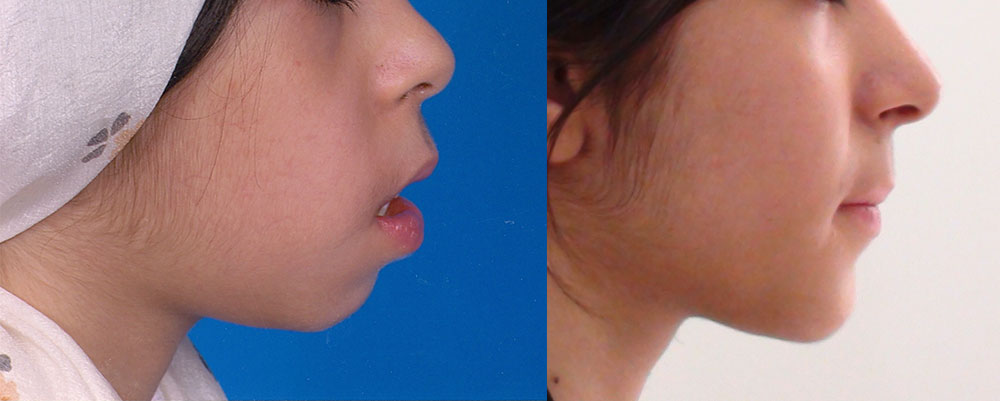
Before visiting Professor Jamilian, this patient suffered from spacing between teeth, crowded and irregular teeth, affecting the patient’s ability to coordinate and align their teeth. During orthodontic treatment, the teeth were gradually moved into appropriate positions and distances from one another. The spaces and irregularities were corrected, creating a more regular and harmonious dental arch. As shown in the before-and-after photographs, the result of treatment was a smile that was straighter, more natural, and more balanced.
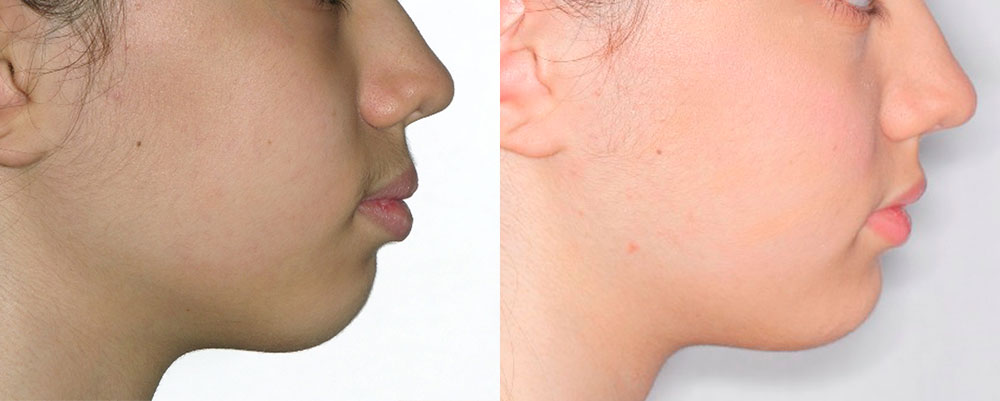
A visible change following treatment is improved lips and facial profile. Correcting the patient’s teeth position helped improve the relationship between their lip and teeth, and soft facial tissues. Resulting in a more balanced and improved smile. Ultimately, treatment is not limited simply to straightening the teeth; it creates greater harmony among the teeth, the smile, and the facial profile. This satisfactory result is shown in the before-and-after images.

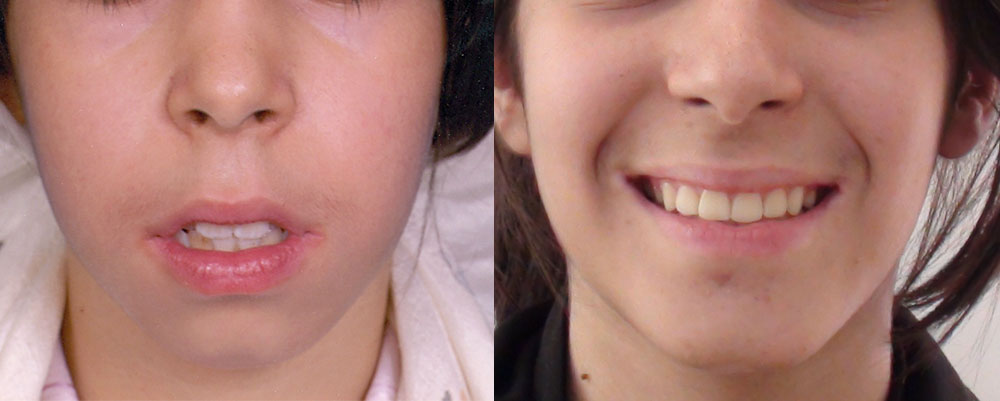
The image above demonstrates the visible changes resulting from orthodontic treatment of jaw deviation and asymmetry from a frontal view. In orthodontic treatment of cases such as these, depending on the cause and severity of the abnormality, fixed orthodontics (brackets and wires) together with asymmetric intermaxillary elastics may be used. By applying controlled forces, the dental relationships on the two sides can be corrected, improving coordination between the jaws and the symmetry of the smile.
When greater anchorage control is required, orthodontic mini-screws, or TADs, may also be used as temporary anchorage points for targeted tooth movements.
For skeletal anchorage and TADs, see the review article Temporary Anchorage Devices in Orthodontics: A Review as well as the scientific literature concerning skeletal anchorage in orthodontics. Evaluating and diagnosing a true skeletal deviation of the jaw requires an examination by a skilled orthodontist as well as a cephalometric assessment of the patient.
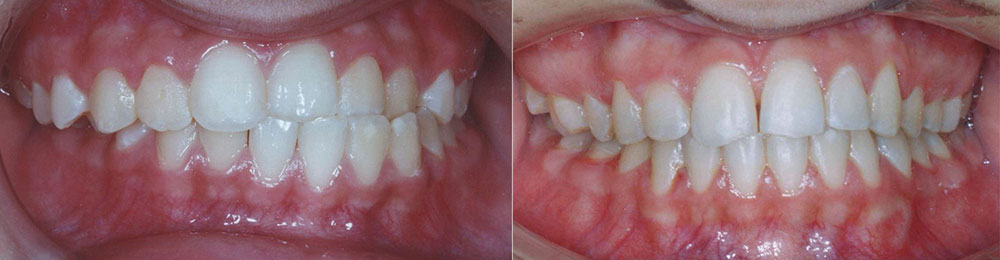
Parents may wonder why their child has developed jaw deviation and dental midline misalignments. Jaw deviation and dental midline deviation can have dental, skeletal, or combined origins.
When the problem is primarily dental or can be corrected orthodontically, treatment can use orthodontic brackets and wires, asymmetric intermaxillary elastics, and, when greater control is required, orthodontic mini-screws (TADs).
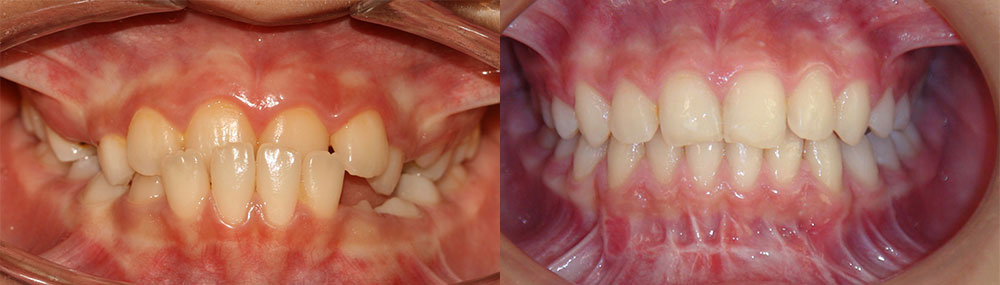
Overbite, described as the excessive protrusion of the front teeth, and underbite, in which the lower jaw projects forward, are both common jaw abnormalities. Research published in Seminars in Orthodontics in 2024 emphasizes that early treatment during the growth years can prevent complex jaw surgeries in adulthood.

The image above shows the result before and after orthodontic treatment of the lower jaw. At the beginning of treatment, there was dental irregularity and insufficient space for the teeth to be positioned correctly, along with an impacted tooth. With orthodontic treatment and appropriate planning, the necessary space was created, and the teeth were gradually positioned more regularly and appropriately within the dental arch. The final image demonstrates the change in the alignment and coordination of the lower teeth after completion of the treatment stages.
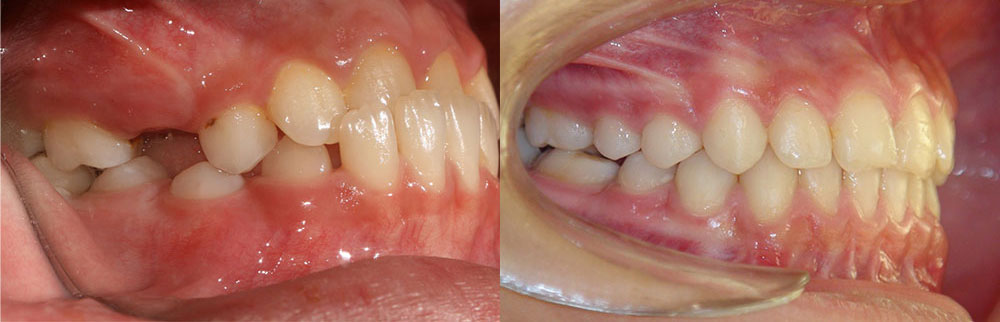
Dental crowding is one of the most common reasons for visiting an orthodontist. According to research published in The Angle Orthodontist in 2023, dental crowding not only affects the appearance of the smile but increases the risk of tooth decay and gum disease by up to 35 percent via the buildup of microbial plaque.
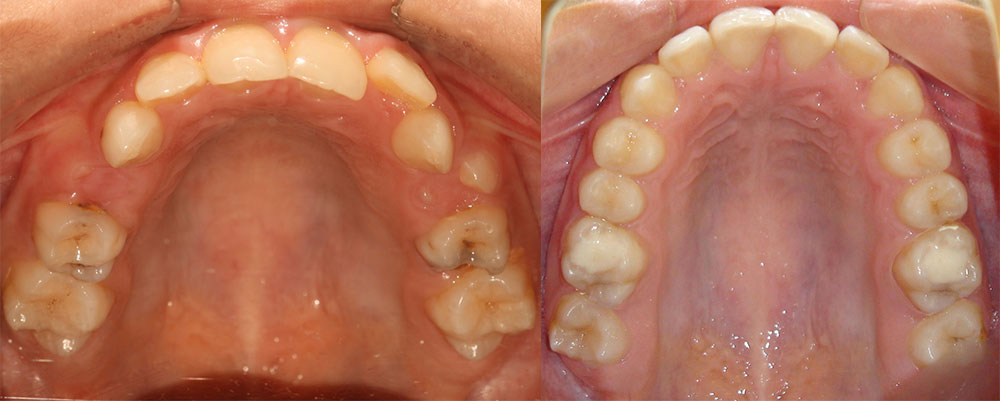
Misaligned teeth make effective cleaning more difficult and create conditions that allow plaque and tartar to accumulate. A 10-year longitudinal study published in the Journal of Periodontology in 2022 found that patients who received orthodontic treatment were 28 percent less likely to develop advanced gum disease.
Which Abnormalities Does Orthodontics Treat?
The problems and abnormalities that an orthodontist directly treats fall into two categories: dental abnormalities and jaw abnormalities. Each is briefly explained below.
Dental Abnormalities
For normal function, teeth should be arranged regularly side by side without excessive spaces. However, in some people, factors such as jaw disorders and improper habits disrupt the natural condition of the jaws and teeth, resulting in the following disorders:
- Tooth rotation: The tooth has rotated around its own axis.
- Overbite: The upper teeth vertically overlap the lower teeth by an excessive amount.
- Underbite: Sometimes described as a “bulldog” appearance, in which the lower teeth sit farther forward than the upper teeth and the upper dental row is positioned too far back.
- Anterior crossbite: When the mouth is closed, several of the upper teeth, often one to three, sit behind the lower teeth.
- Posterior crossbite: The back teeth of the upper jaw (the molars and premolars) sit inside the lower teeth instead of outside them.
- Overjet: The upper front teeth project forward, or the lower teeth do not project sufficiently forward.
- Open bite: An opening between the two jaws at the front, back, or sides. Specifically, in an anterior open bite, when the molar teeth come together, the upper and lower front teeth do not meet. A space therefore remains between them.
- Misplaced midline: The midline of the upper teeth does not line up with the midline of the lower teeth.
- Spacing: Excess spaces between the teeth, which may develop because a tooth has been lost or because a tooth has incompletely developed or failed to develop.
- Crowding: A condition where a number of teeth, more than normal, are positioned within a dental row, causing the teeth to overlap.

Jaw Abnormalities
Very severe and serious jaw problems often require jaw surgery. However, some jaw abnormalities can, to a considerable extent, be treated with orthodontics, including:
- Forward position of the upper jaw, Class II
- Forward position of the lower jaw, Class III
- Differences in jaw growth
- Skeletal open bite
- Skeletal deep bite
- Jaw deviation
Types of orthodontics methods and techniquTypes of Orthodontic Methods and Techniqueses
Patients currently have several options available for orthodontic treatment. Depending on the type of disorder and their individual preferences, a patient can choose among them. In general, orthodontic methods include:
- Fixed orthodontics
- Removable orthodontics
- Invisible orthodontics
Fixed Orthodontic Treatment
The main distinguishing feature of fixed orthodontics is that the patient cannot remove the orthodontic appliance from the mouth during treatment. In practice, the appliance remains in the mouth 24 hours a day until the treatment period is completed.
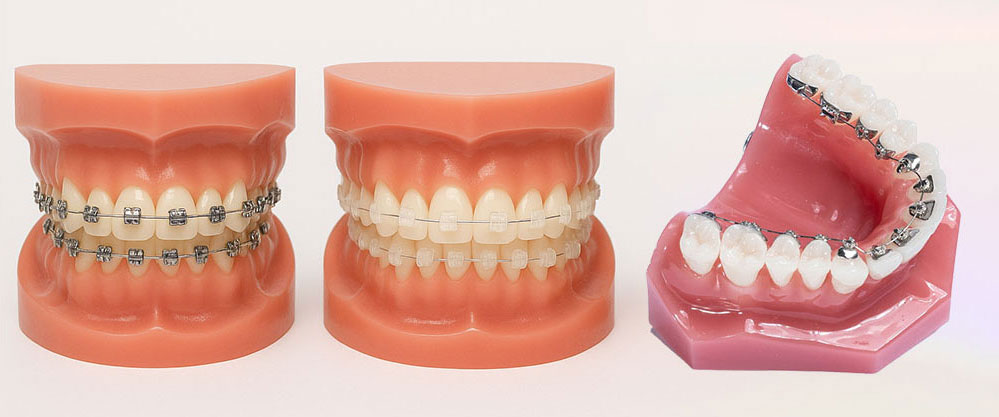
Fixed orthodontics can be divided into several types according to factors such as the material of the orthodontic appliance, its position in the mouth, the way the appliance is adjusted, and other characteristics:
- Metal
- Ceramic
- Self-ligating systems
- Lingual, behind the teeth
Recent research in the Journal of Clinical Orthodontics in 2022 indicates that modern metal braces, using newer designs and nickel-titanium alloys, have reduced treatment time by an average of 20 percent compared with two decades ago. Ceramic brackets are also considered an appearance-oriented option because they match the colour of the teeth, and studies indicate that advances in composite materials have considerably improved their resistance to discoloration.
In the lingual method, brackets are installed on the inner surfaces of the teeth and remain completely hidden from view. A 2023 study in the Journal of Orofacial Orthopedics found that lingual orthodontics is an excellent option for patients concerned about the appearance of orthodontic braces, although it may cause temporary speech difficulties during the first few weeks.
Removable Orthodontics
UnlikeUnlike fixed appliances, removable appliances can be taken out of the mouth when necessary, such as while eating or brushing. This form of orthodontics can also be performed using different methods:
- Simple removable plates
- Functional appliances, Twin Block, Bionator, Activator
Simple plates are primarily used to treat mild dental problems. Functional appliances, in contrast, are capable of treating more complex dental abnormalities and select abnormalities of the jaws.
Invisible Orthodontics
Invisible orthodontics also includes several different types. With certain types, such as ceramic orthodontics and removable plates, the materials used to construct the orthodontic appliance make it difficult to see or identify within the mouth. With lingual orthodontics, the appliance is installed on the inside of the teeth and therefore cannot be seen.
Clear aligners such as Invisalign have produced a major transformation in modern orthodontics. These removable transparent trays, produced using three-dimensional scanning and computerized design, make it possible to treat mild to moderate abnormalities without the visible appearance of metal braces.
A comprehensive meta-analysis published in the European Journal of Orthodontics in 2024 found that clear aligners have effectiveness comparable to fixed orthodontics for correcting mild to moderate dental crowding. However, fixed braces continue to have an advantage in treating severe rotational or vertical abnormalities.
Invisible removable orthodontics is the best option for people who, because of their professional, social, or personal circumstances, do not want to use fixed metal orthodontics.
Which Type of Orthodontics Is More Suitable for Me?
Every orthodontic technique and method has advantages and disadvantages. Therefore, no single method is recommended as the best option for everyone. Factors such as the type and severity of the disorder, the patient’s age, treatment costs, patient preferences, and other considerations all play a role.
For severe problems involving the teeth and jaws, fixed metal orthodontics is often the first choice. For mild to moderate disorders, the patient has a wider range of choices.
Ceramic brackets are recommended more often for teenagers and adults because they require greater care and carry a higher risk of breakage in children.
Lingual orthodontics, behind the teeth, requires considerably more cooperation from the patient. Therefore, it is usually recommended for adults and is not suitable for children. Ceramic brackets are likewise recommended more frequently for adolescents and adults because they require greater care and have a higher risk of breaking in children.
In addition, removable orthodontics is recommended for children only for jaw-related problems, while fixed orthodontics is considered the better option for correcting dental problems. This is because using removable orthodontics requires a high level of awareness and cooperation from the patient. If it is not used for the prescribed amount of time, the source states that it “can reduce the treatment period.”
Structure of an Orthodontic Appliance
The structure of orthodontic appliances varies according to the type of appliance. Fixed and removable orthodontic appliances are very different from one another in this respect. In particular, removable orthodontic appliances are designed so that they are easy for the patient to use and so that the patient does not have difficulty inserting or removing the appliance.
Components and Parts of a Fixed Orthodontic Appliance
A fixed orthodontic appliance consists of the following components:
- Brackets: Small components bonded to the surfaces of the teeth. They may be made from metal, ceramic, composite, and other materials.
- Wire: A thin wire that passes through all of the brackets.
- Ligature: Made from metal or plastic and used to keep the orthodontic wire fixed inside the brackets.
- Molar bands: Metal rings placed around the back molar teeth.
- Intermaxillary elastics: Elastic bands connecting teeth in the upper jaw to teeth in the lower jaw.
- Hooks: Located on the brackets and used to hold intermaxillary elastics.
In addition to these components, other parts may be added to a fixed orthodontics appliances depending on the particular abnormality, such as adjustment screws. The brackets are responsible for transferring force to the teeth. The orthodontic wire produces the main force.
Image caption: Three major types of fixed orthodontic appliances: metal, ceramic, and lingual.From left to right: fixed metal orthodontics, fixed ceramic orthodontics, and fixed behind-the-teeth orthodontics, also known as lingual orthodontics.
Components and Parts of a Removable Orthodontic Appliance
A removable appliance has several different components. However, it has one important difference from a fixed appliance: all of its components are integrated into a single unit. In practice, all parts of the appliance are incorporated into an acrylic plate. The patient therefore handles a large orthodontic appliance that can be removed from the mouth when necessary and then reinserted. The basic components of a removable orthodontics appliances include:
- Acrylic plate: The main rigid section of the appliance, made from acrylic resin.
- Retention wires: Hold the appliance on the teeth.
- Active wires: Move teeth in specific directions.
- Expansion screws: Usually positioned in the center of the plate and used to enlarge the arch of the upper or lower jaw.
Functional removable orthodontic appliances include additional components in addition to those listed above, such as:
- Inclined planes: Cause the lower jaw to assume a forward position when the mouth closes.
- Rails or jaw-advancement plates: Used in appliances such as the Bionator or Activator.
- Framework wire: Used to guide the tongue, regulate mouth breathing, or control oral habits.

Stages of Orthodontic Treatment from Beginning to End
Treatment begins with an initial consultation and clinical examinations. If necessary, the doctor orders radiographs and digital scans. The appropriate orthodontic technique is then selected based on the type and severity of the abnormality, the patient’s individual circumstances, and the patient’s preferences. The doctor then develops an organized and precise treatment plan based on these factors.
Preparing the Patient
Before the appliance is installed in the mouth and the main stage of treatment begins, one or more of the following procedures may be required depending on the patient’s condition:
- Tooth extraction
- Treatment of tooth decay before orthodontics
- Dental scaling
- Correction of oral habits such as thumb sucking or mouth breathing
- Dental laminates, implants, or restorative dental procedures
- Mini-screw placement, Mini Screw / TAD
Installing the Orthodontic Appliance
Orthodontic Appliances are installed within a patient’s mouth, and dental wiring is done during an approximately 30-minute appointment. With fixed orthodontics, brackets must be securely bonded to the surfaces of the teeth using various methods. With removable orthodontic appliances, plates are given to the patient, who must use them according to a specific treatment schedule.

Orthodontic Appliance Adjustment Appointments
After the orthodontic appliances are installed, follow-up visits are held according to a regular schedule. During these appointments, progress of treatment is evaluated, potential problems with the appliance are addressed, and the appliance is readjusted. Patients using invisible orthodontics will receive new aligners.
Completion of Orthodontic Treatment and Removal of the Appliance
The final stage of orthodontic treatment includes several steps, including:
- Final evaluation: alignment of the teeth, correct bite, aligned midline, and other factors.
- Removal of the brackets using specialized tools.
- Removal of adhesive from the surfaces of the teeth.
- Evaluation of gum and dental health.
- Prescription of medication or use of microabrasion if necessary.
- Taking impressions for a retainer (retention treatment).
- Professional scaling or polishing if necessary.
- Planning subsequent follow-up visits according to the patient’s condition.
Possible Side Effects of Orthodontics
Patients who do not properly maintain oral hygiene and follow safety instructions during orthodontic treatment are at significant risk of the following:
- Tooth decay
- Gum damage
- Pain and infection
- Damage to the appliance
- Tooth-root resorption
- White spots on the teeth
- Disruption of the treatment schedule, among other problems
How Much Does Orthodontic Treatment Cost?
The cost and price of orthodontic treatment depend on several factors, including the length of treatment, the type of orthodontic appliance, and maintenance and repair expenses. In general, metal brackets are the most economical to design and manufacture. Because of the materials used, ceramic brackets cost more than metal brackets. Among these options, removable orthodontics has the highest cost because it requires the production of multiple moulds and plates using complex computerized calculations. The starting price for fixed metal orthodontics in the Iranian year 1405 is calculated at approximately 50 million tomans per jaw.
This amount will naturally vary depending on the different characteristics of the abnormality and the patient’s condition.
Orthodontics at Different Ages
Orthodontic treatment works by moving the teeth and jawbones at a very slow rate. The younger the patient is, the more easily this movement can take place. In addition, treatment can be performed before the abnormality becomes more severe. Experimental and scientific evidence indicates that the the best age for orthodontics approximately seven or eight years of age. However, this does not mean that people older than 14 or 18 cannot benefit from orthodontic treatment. Based on “Orthodontics for Children: Developing a Healthy Smile,” from the American Association of Orthodontists.
Nevertheless, orthodontic treatment in adults remains effective and necessary, although the treatment period is often longer. Additionally, the risk that an abnormality becomes severe increases considerably, and a patient may ultimately require jaw surgery. At the doctor’s discretion, removable orthodontics can begin as early as seven years old. For fixed orthodontics, the patient’s teeth must have fully developed, which translates to approximately age ten onward.
Preventive Orthodontics for Children
The American Association of Orthodontists recommends that children receive their first orthodontic examination at the age of seven. Early interventions such as space maintainers and functional appliances can guide jaw growth and reduce the need for more complex treatments later. A study published in the Journal of Dental Research in 2023 found that preventive orthodontic treatment in children with Class II jaw abnormalities reduced the probability of needing permanent-tooth extraction by 40 percent.
Can Adults Also Receive Orthodontic Treatment?
Yes. Adults can receive orthodontic treatment, and it is not limited to children, teenagers, or those in their 30s and 40s. At Professor Jamilian’s specialized orthodontic clinic, a substantial proportion of patients are 30 years old or older and are described as being highly satisfied with the results of orthodontic treatment of their teeth and jaws. New orthodontic appliances, such as the removable orthodontic appliance invented by Professor Jamilian, have allowed many adult patients to avoid jaw and dental surgery. For this reason, orthodontic treatment for adults is available at this clinic.

Frequently Asked Questions About Orthodontics
People using removable orthodontics have no dietary restrictions. With fixed orthodontics, however, the patient should avoid consuming sticky and hard foods. Ceramic brackets are more vulnerable and may break.
If your bracket becomes loose or detached, it is an emergency; please contact your orthodontist immediately for an unscheduled visit. Delaying repair or proper treatment may lead to a longer treatment plan and cause issues later on.
While wearing an orthodontic appliance, the patient needs to maintain the principles of maintaining oral hygiene. Brushing and flossing techniques are considerably different from those normally used without orthodontics. Ask your orthodontist for appropriate orthodontic toothbrushes and dental floss. Use appropriate mouthwash to prevent discoloration or damage to the orthodontic brackets.
During the first days of treatment, the patient may speak with a slight lisp. However, after several days, the patient becomes accustomed to the presence of the brackets and can pronounce words comfortably. This adjustment may take longer with lingual, or behind-the-teeth, orthodontics.
The timing of appointments depends on the patient’s condition and the type of orthodontic appliance. With fixed orthodontics, appointments are generally scheduled every four to six weeks. With removable orthodontics, visits are usually scheduled every six to eight weeks. At the end of each appointment, the treating doctor determines the exact date of the next visit.
The fees for orthodontic treatment using fixed and removable appliances are different. To obtain an approximate cost, you can contact the clinic. Treatment prices may also change during the year if the materials being used change. For this reason, the exact cost of orthodontic treatment is determined after the patient has been examined. At Dr. Jamilian’s orthodontic clinic, it is possible to pay the cost of orthodontic treatment in installments. At present, the basic orthodontic cost is approximately 50 million tomans per jaw.
The choice of orthodontic treatment depends on the severity and type of abnormality, the patient’s age, the patient’s financial means, and the patient’s personal preferences. For severe abnormalities, fixed brackets are generally recommended and, in some cases, effectively required. For mild to moderate cases, the patient has more choices. Based on the factors mentioned above, the treating doctor will recommend the best option for you.
Invisible orthodontics may sound appealing to many people, as it allows the patient to use the appliance with greater confidence and without feeling restricted in social situations. However, metal orthodontic appliances, or metal brackets, are more durable than invisible orthodontic appliances. Invisible lingual orthodontics are often exposed to greater impact and pressure behind the teeth and therefore become detached or damaged more frequently. The treatment time for invisible lingual orthodontics is also longer than the standard method using brackets on the front surfaces of the teeth.
Orthodontics does not cause continuous pain. However, whenever the appliance is adjusted, the patient may feel mild to moderate pressure in the mouth. This pain is temporary and subsides after approximately three to five days. Ordinary orthodontics pain-relieving medication such as acetaminophen can be used to control orthodontic pain.
The duration of orthodontic treatment depends on the patient’s age, level of cooperation, and the treatment method used. For a mild abnormality, treatment lasts approximately 6 to 12 months. Moderate abnormalities can be treated in approximately 1 to 2 years. For severe cases, treatment may last approximately 2 to 3 years. In approximately 90 percent of patients, treatment lasts between 1.5 and 2.5 years.
Fixed orthodontics is performed using brackets and wires. However, removable invisible orthodontics, commonly known as Invisalign, is performed with transparent aligner trays and is used to treat irregular teeth.
Yes. If certain preventive measures are not followed after treatment and the patient does not use a retainer, there is a risk that this can occur. During the first six months, the patient should use the retainer full-time. After that, the retainer should be worn only while sleeping for approximately one to two years. Harmful oral habits such as tooth grinding, sucking on objects, and similar habits should also be corrected.
The cost of orthodontic treatment is covered by some supplementary insurance policies that have agreements with Professor Jamilian’s clinic. Please contact your insurance provider to obtain details of your policy. The clinic states it has agreements with insurance plans associated with Bank Mellat, Bank Sepah, Bank Tejarat, Bank Keshavarzi, and others.
Yes, orthodontics will produce subtle changes. Ordinary orthodontic treatment often makes the face more harmonious and symmetrical. Intense facial changes are generally associated with jaw surgery treatments if the patient’s jaws are positioned too far forward or backward.
If orthodontic treatment is not performed for patients with abnormalities involving the jaws and teeth, various complications may develop. These complications are stated to include tooth decay, gum problems, inadequate chewing of food, and digestive problems. Headaches, TMJ problems, and pain in the neck, shoulders, and back are also described as consequences of jaw and dental abnormalities and of failing to undergo orthodontic treatment. Crooked and irregular teeth can also negatively affect the patient’s appearance.
Only a dentist or orthodontist can determine whether you are able to benefit from orthodontic treatment. Using diagnostic tools including a complete medical and dental history, clinical examination, plaster models of the teeth, and specialized imaging, an orthodontist can determine whether you require orthodontic treatment. The orthodontist can then recommend an appropriate treatment plan for correcting your dental problems.
Due to the rapid advancements in dental orthopedics, almost all patients with jaw and dental problems, at virtually any age, can be suitable candidates for orthodontic treatment.